Scroll through Instagram or TikTok around the time of ovulation and you will very likely come across seed cycling: a practice that involves rotating specific seeds through the month in an effort to support hormone balance. Clients ask me about it often, and as a registered nutritionist, my honest answer is a little more nuanced than either a firm yes or a dismissive no, which is exactly why I want to walk you through it properly here.
What seed cycling actually involves
The basic idea is to eat different seeds during the two main phases of the menstrual cycle. During the follicular phase, roughly the first half of the cycle from the start of your period until ovulation, you eat a tablespoon each of ground flaxseed and pumpkin seeds daily. During the luteal phase, from ovulation until your next period, you switch to a tablespoon each of sesame seeds and sunflower seeds. The theory is that the nutrients in these seeds interact with your changing hormone levels across the month, supporting oestrogen in the first half of the cycle and progesterone in the second. The practice has roots in naturopathic and traditional wellness circles, and it has become considerably more popular in recent years as interest in cycle-syncing and hormone health has grown across social media.
What the evidence actually shows
Here is where I want to be honest with you, because it is not something you hear often enough in wellness content. Robust, well-designed clinical research specifically testing the seed cycling protocol itself is very limited. Most of what circulates online is based on the known properties of individual nutrients within these seeds, such as lignans in flaxseed, which have a mild, complex interaction with oestrogen, and zinc in pumpkin seeds, which plays a role in hormone production more broadly. That is a reasonable theoretical basis, but it is quite different from having solid researchs that show seed cycling itself reliably improves symptoms such as PMS, irregular cycles or menopausal symptoms.
Part of the difficulty is that hormone levels naturally fluctuate a great deal between individuals and even between cycles for the same person, which makes this a genuinely hard thing to study well. A short trial of a few months, without a proper control group, cannot easily separate out the effect of the seeds themselves from other changes happening at the same time, such as eating more mindfully overall or simply paying closer attention to your cycle. Some people who try seed cycling report feeling better, which may reflect a genuine benefit, a placebo effect, or simply eating a more varied, nutrient-dense diet overall. I think it is important to hold that uncertainty honestly with clients, rather than overselling seed cycling as a proven fix for hormonal symptoms.
Why the seeds themselves are still worth eating
Regardless of how you feel about the cycling protocol specifically, the seeds involved are genuinely nutritious and worth including in your diet on their own merits. Flaxseed and pumpkin seeds are good sources of fibre, plant-based omega-3 fats and lignans. Sesame and sunflower seeds provide healthy fats, vitamin E, zinc and selenium, both of which support normal hormone production and immune function. There is also a broader, well-established link between dietary fibre and hormone metabolism, since fibre supports healthy digestion and elimination, which plays a role in how the body processes and clears excess hormones such as oestrogen.
A useful way to think about seed cycling, in my view, is less as a precise hormonal protocol and more as a structured, enjoyable way to make sure you are regularly eating a good variety of seeds, which most of us could benefit from regardless of where we are in our cycle.
Who might find seed cycling worth exploring
In my consultations, seed cycling tends to come up most with clients seeking nutritionist support through menopause or looking for practical, food-based ways to support PCOS nutrition, both groups who are often already paying close attention to how their diet interacts with their hormones. If that describes you, seed cycling can be a low-risk, food-based addition to try alongside the other foundations of a balanced diet, such as adequate protein, fibre and healthy fats. It is not, however, a substitute for addressing the underlying causes of significant hormonal symptoms, and it should be viewed as one small piece of a much bigger picture rather than the centrepiece of a hormone-support plan.
How to try it, if you would like to
If you would like to experiment with seed cycling, there is very little downside to doing so, provided you are not relying on it as a substitute for addressing more significant hormonal symptoms. A simple way to start:
Wondering how this applies to you specifically?
- Grind flaxseed just before eating, as whole flaxseed passes through the gut largely undigested
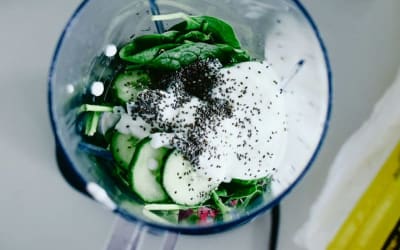
- Add a tablespoon each of ground flaxseed and pumpkin seeds to porridge, yogurt or a smoothie during the first half of your cycle
- Switch to a tablespoon each of sesame and sunflower seeds from ovulation until your next period
- Track how you feel over two to three cycles, rather than judging it after just one month
- Keep the rest of your diet varied and balanced, since no single food group works in isolation
- Store ground flaxseed in the fridge or freezer, as it can go rancid more quickly once ground
That said, if you have significant or worsening symptoms such as very heavy, painful or irregular periods, signs of PCOS, or perimenopausal symptoms that are affecting your quality of life, these deserve proper medical assessment. I would always recommend discussing significant hormonal symptoms with your GP, since these can have a number of underlying causes that need to be properly investigated, rather than managed through diet alone. Seed cycling, or any dietary change, works best as a supportive habit sitting alongside appropriate medical input, not instead of it.
You might also find my post on learn about weight gain during menopause helpful.
You might also find my post on nutrition and diet during pregnancy explained helpful.
You might also find my post on nutrition and diet for endometriosis sufferers helpful.
For a practical meal idea, try my savoury turmeric oat bowl with wilted spinach & poached egg recipe.
For related reading, see my posts on why menopause slows metabolism (and what helps) and menopause meal plan: what to eat every day.
When three months of meticulously grinding flax and pumpkin seeds still leave you dealing with 40-day unpredictable cycles or intense pre-period energy crashes, a standardised online seed template has reached its limit. Reclaiming smoother, more comfortable cycles requires looking at your complete nutritional picture rather than relying on a single daily habit. Take a look at my coaching packages and book a consultation today, so we can map out a targeted strategy for your unique rhythm alongside your doctor's care.