If you’ve been diagnosed with PCOS and you have recently been prescribed semaglutide, you might be wondering how to adjust your meals. In my practice, I see many women who feel a mix of excitement and uncertainty when starting a GLP-1 medicine. The good news is that a few thoughtful food choices can help you eat comfortably and keep your energy steady through the day.
Why GLP-1 matters for PCOS
Semaglutide mimics the gut hormone glucagon-like peptide-1, which slows stomach emptying and reduces hunger, and it also affects how the body handles glucose. For people with PCOS, insulin resistance is a common feature linked with weight gain, acne and irregular periods. The medication is only part of the picture; food and everyday habits still matter for how you feel.
Core nutrition principles while on semaglutide
My approach focuses on three pillars: balanced plates, fibre-rich foods and a varied range of micronutrients. Below is a quick checklist you can start using today:
- Include protein at every meal. Eggs, Greek yoghurt, legumes and fish are good options that support fullness and muscle.
- Choose lower-glycaemic carbohydrates. Wholegrains, oats, quinoa and most fruits give steadier energy than refined starches.
- Include soluble fibre. Foods such as chia seeds and oats are gentle on digestion, but add them gradually if your stomach feels slow.
- Include healthy fats. Olive oil, avocado and nuts provide essential fatty acids, in small amounts so meals do not sit heavily.
- Mind the micronutrients. Foods rich in zinc, magnesium and vitamin D, such as seeds, leafy greens and oily fish, are worth keeping in your week. I do not recommend or prescribe supplements.
Sample day of eating
Below is a simple PCOS-friendly menu suited to a smaller appetite. Feel free to swap ingredients to suit your preferences.
- Breakfast: Greek yoghurt topped with ground flaxseed, a handful of berries and a drizzle of honey, with a slice of wholegrain toast.
- Mid-morning snack: A small apple with a few almonds.
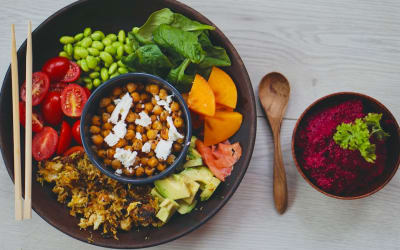
- Lunch: Quinoa salad with grilled salmon, mixed leafy greens, cherry tomatoes, cucumber and a lemon and olive oil dressing.
- Afternoon snack: Carrot sticks with hummus.
- Dinner: Stir-fried tofu, broccoli and peppers in a soy and ginger sauce, served over a modest portion of brown rice.
This pattern brings together protein, fibre and healthy fats in portions that many people find comfortable on a GLP-1 medicine.
Hydration and comfort tips
Semaglutide can cause mild nausea, especially in the early weeks. Sipping water through the day, rather than drinking a lot with meals, may help you feel more comfortable. Smaller, slower meals and avoiding very rich or greasy food can also help.
When to seek medical advice
Dose, timing and any change to your semaglutide are decisions for your prescriber, and I work alongside your doctor on those and on anything linked to your PCOS or blood tests, while I help with the food on your plate.
How I can help you navigate this journey
Every woman’s PCOS profile is unique, and the way semaglutide affects your appetite and digestion will differ. In my one-to-one online consultations, I look at your meals, cultural foods and routines and share practical ideas. Whether you need quick snack ideas or batch-cooking strategies, I’m here to support you.
General guidelines only go so far when appetite is low, a meal feels too much to finish or afternoon energy dips persist. If you want food-focused support that fits around your appetite and your life, explore my nutrition services or get in touch. You can also read more on my PCOS nutrition and GLP-1 support pages.