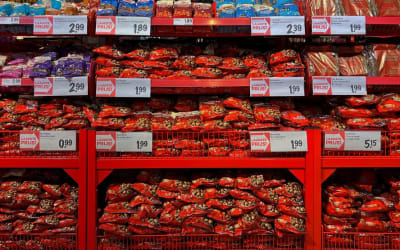
HFSS stands for High Fat, Sugar, and Salt – a classification used by the UK government to identify foods considered less healthy based on their nutritional profile. As a registered nutritionist with AfN specialisms in public health and food, and former National Sustainability Manager (CSR), Health & Nutrition UK/IE at Aldi, where I led HFSS legislation compliance across Great Britain and Ireland, I work with both individuals and food businesses to navigate these regulations and make informed choices about food. Here is everything you need to know about HFSS food regulations and how they affect consumers and businesses alike.
What Does HFSS Mean?
HFSS is a classification system based on the UK Nutrient Profiling Model, originally developed by the Food Standards Agency in 2004-05. Foods are scored on their levels of energy, saturated fat, total sugar, and sodium per 100g, balanced against positive nutrients like fibre, protein, and fruit and vegetable content. Foods scoring 4 or more points, or drinks scoring 1 or more, are classified as HFSS – meaning they are considered high in fat, sugar, or salt.
Common examples of HFSS foods include chocolate, crisps, biscuits, sugary cereals, ice cream, and many ready meals. However, some products that consumers perceive as healthy – such as certain granola bars, flavoured yogurts, and fruit juices – can also be classified as HFSS due to their sugar content.
UK HFSS Regulations: What Changed
The Health and Care Act 2022 introduced restrictions in England in stages, with advertising rules following separately, UK-wide:
- Location restrictions (England, since 1 October 2022) – HFSS products can no longer be displayed at store entrances, checkouts, or end-of-aisle displays, in stores over 2,000 sq ft belonging to businesses with 50 or more employees.
- Volume promotions (England, since 1 October 2025) – multibuy and "X% extra free" offers on HFSS products are restricted, for the same size of business.
- Advertising restrictions (UK-wide, since 5 January 2026) – a 9pm television watershed and a total restriction on paid-for online advertising of HFSS products, with a specific exemption for brand advertising that doesn't depict a particular HFSS product.
The location and promotion restrictions apply only to businesses with 50 or more employees, and the out-of-home sector (restaurants, cafés, and takeaways) is exempt from both – though not from the UK-wide advertising restriction, which has no small-business or out-of-home carve-out. Scotland, Wales, and Northern Ireland are developing their own approaches to location and promotion restrictions.
What HFSS Means for Food Businesses
For food manufacturers, retailers, and food service providers, HFSS classification has significant commercial implications:
Need HFSS compliance or reformulation support?
View HFSS Compliance Consultancy- Product reformulation – many businesses are reformulating products to fall below the HFSS threshold, reducing sugar, salt, or fat content whilst maintaining taste and consumer appeal. In my previous role leading HFSS compliance for Aldi across GB and Ireland, I drove a 5-10% annual increase in product reformulations, which contributed to a 15% growth in healthy product sales alongside 100% regulatory compliance – reformulation and commercial growth are not mutually exclusive.
- Labelling and compliance – businesses must ensure their products are correctly profiled against the Nutrient Profiling Model. Errors can result in non-compliance with promotion restrictions. For guidance on UK food labelling regulations, see my dedicated guide.
- Marketing strategy – advertising and promotional strategies must be reviewed to ensure HFSS-classified products are not promoted in restricted ways, and that any brand advertising stays within the specific brand-advertising exemption.
- Menu and range planning – food service businesses and retailers may want to adjust product ranges to offer more non-HFSS alternatives, even where they are exempt from the location and promotion rules.
What HFSS Means for Consumers
If you have visited a supermarket recently, you may have noticed changes to where certain products are displayed. Sweets, crisps, and sugary drinks are no longer greeting you at the checkout or filling prime shelf space at the end of aisles. These changes are designed to make healthier choices easier and reduce impulse purchases of less healthy foods.
Understanding food labels is an important skill for making informed choices. I have written a practical guide on how to read a food label that covers traffic light labelling, nutrition panels, and ingredient lists.
How I Can Help Your Business
Whether you are a food business looking to reformulate products, review labelling compliance, or develop a nutrition strategy, or an individual wanting to understand how to navigate HFSS products in your diet, I can help. My medical background (MBBS) and specialist nutrition qualification (MSc), together with AfN specialisms in public health and food, mean I understand both the regulatory landscape and the practical science behind food reformulation and dietary planning.
Alongside running NutrificientLife, I led HFSS legislation compliance across Great Britain and Ireland as National Sustainability Manager (CSR), Health & Nutrition UK/IE at Aldi, and earlier worked as a Public Health Improvement Officer with Well Doncaster's Public Health Team on NHS and council-led food, labelling, and HFSS policy campaigns. If your business needs an HFSS compliance audit or reformulation guidance, you can read more about my HFSS compliance and food reformulation consultancy.
The moment a minor ingredient shift pushes your Nutrient Profiling Model score across the threshold and jeopardises key promotional space, standard guidelines fall short. To reformulate effectively without compromising on taste, texture, or retail presence, review my compliance packages and schedule a free discovery call so we can map out a robust, compliant pathway for your products.