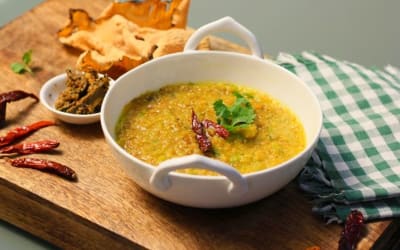
In my practice, I frequently speak with clients who wonder whether their traditional South Asian diet is helping or hindering their digestion. You might enjoy a hearty bowl of dal, handmade roti, and fresh dahi every day, yet still struggle with trapped wind, heaviness, or uncomfortable bloating. It is easy to assume that Western gut health trends like kombucha or sourdough are necessary for a healthy gut, but the truth is that traditional South Asian cuisine is already packed with microbiome-nourishing ingredients when prepared thoughtfully.
The foundation of gut health relies on two key components: feeding your resident beneficial bacteria with prebiotic fibre and introducing helpful microbes through fermented foods. Traditional South Asian meals naturally excel at both. Dals, beans, and pulses are exceptional sources of soluble fibre and resistant starch, which pass into the large intestine to feed key bacterial species.* If you want to increase your daily dietary fibre, pulses like chana dal, rajma, and moong are among the most effective, budget-friendly foods you can choose.
However, the complex carbohydrates in lentils can sometimes ferment rapidly in the colon, leading to gas and discomfort for sensitive digestive systems. In traditional cooking, specific preparation techniques help reduce these effects. Soaking whole lentils and beans overnight before cooking breaks down phytates and complex oligosaccharides, making them far easier to digest. Pairing your meals with digestive spices like hing (asafoetida), cumin (jeera), ginger, and ajwain is not just about flavour; these spices stimulate digestive enzymes and help relax the smooth muscles of the digestive tract.
Another cornerstone of South Asian gut health is fresh homemade dahi (yoghurt) and fermented drinks like buttermilk or chaas. These foods provide live bacterial cultures that temporarily interact with your digestive tract, encouraging a balanced microbial environment. Understanding how live fermented foods differ from prebiotic fibres is essential for building a resilient digestive system, and you can read more in my guide on probiotics vs prebiotics. Incorporating a small portion of dahi or tempered chaas with mustard seeds and curry leaves into your daily main meal is a gentle way to support gut diversity.
Wondering how this applies to you specifically?
To get the maximum microbiome benefits from your meals while reducing bloating naturally, consider implementing these simple culinary adjustments in your kitchen:
- Soak all whole pulses, beans, and lentils for at least 8 to 12 hours, rinsing thoroughly before cooking in fresh water.
- Temper your dal with digestive spices such as cumin seeds, cracked coriander seeds, fresh ginger, and a pinch of hing.
- Include a daily serving of unsweetened, live-culture yoghurt or homemade dahi with your lunch or dinner.
- Rotate your lentils across the week, switching between light yellow moong, red masoor, and whole black urad to encourage a broader variety of gut microbes.
- Increase your intake of leafy greens like spinach, fenugreek (methi), and mustard greens cooked with a touch of healthy fat to aid nutrient absorption.
If you experience persistent digestive pain, sudden bowel changes, or severe bloating after meals, it is important to discuss these symptoms with your doctor to rule out underlying clinical conditions before making drastic changes to your diet. For general gut support, introducing high-fibre foods gradually alongside adequate hydration gives your microbiome time to adapt comfortably.
When you have tried double-soaking your chana dal and adding extra hing to your tadka, yet still find yourself unbuttoning your trousers after half a fresh roti, general gut advice has reached its limit. Optimising your gut health is not about abandoning your culinary heritage, but about understanding the precise interplay between pulse fermentation, spice chemistry, and your individual digestive tolerance. If you are ready to enjoy family dinners feeling light and comfortably satisfied, please explore my nutrition services or get in touch through my contact page to book a consultation, so we can refine your daily meals alongside your doctor's overall care.